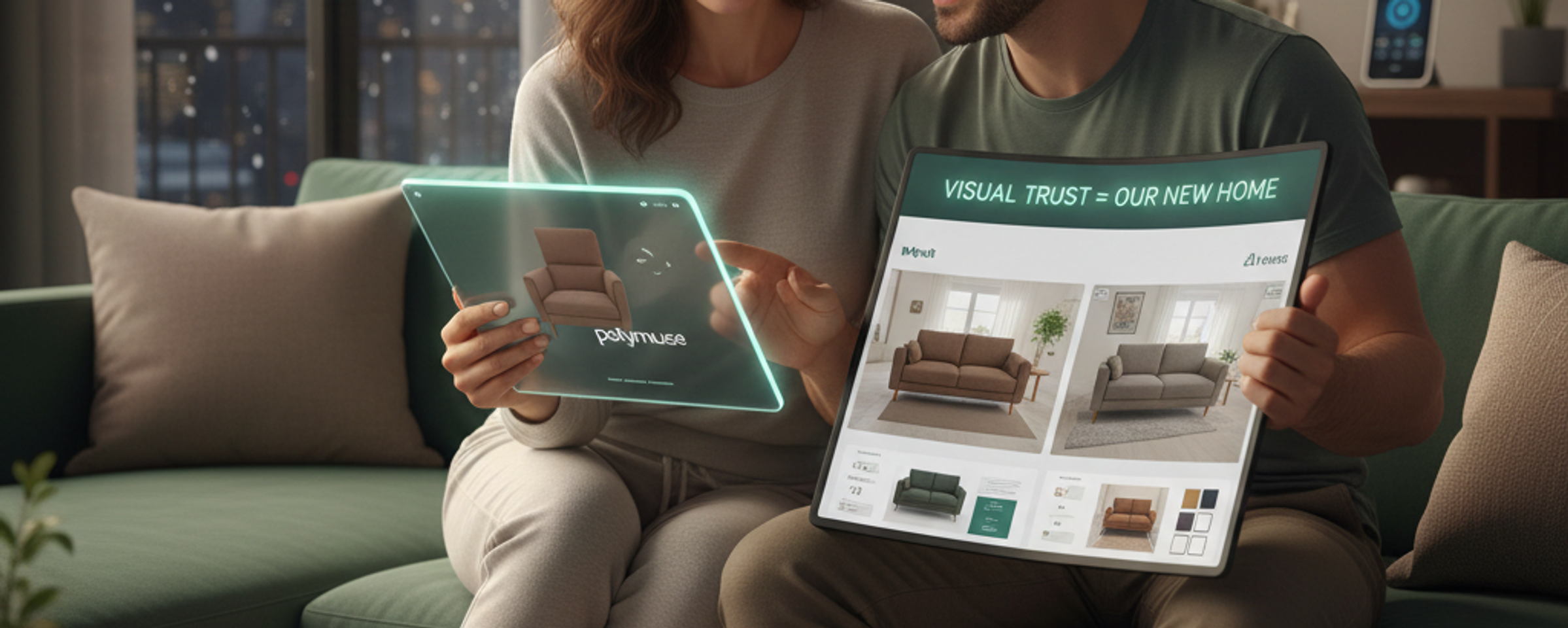
The furniture industry is hitting a crossroads. With shifting trade tariffs, fluctuating consumer demand, and high interest rates, growth is no longer a given. In 2026, the winners won't be those who spend the most on ads, but those who build the strongest visual trust.
At Polymuse, we believe that when a customer can't touch a product, the "visual truth" is the only thing that closes the sale.
1. Visual Experience Over Price Wars
In a "mini-recession" climate, racing to the bottom on price is a losing game. Shoppers are cautious; they want certainty.
- ✓The Trend: Moving from static photos to photorealistic, interactive showrooms.
- ✓The Impact: Retailers using rich visualization see conversion jumps of over 13% compared to those sticking with basic imagery.
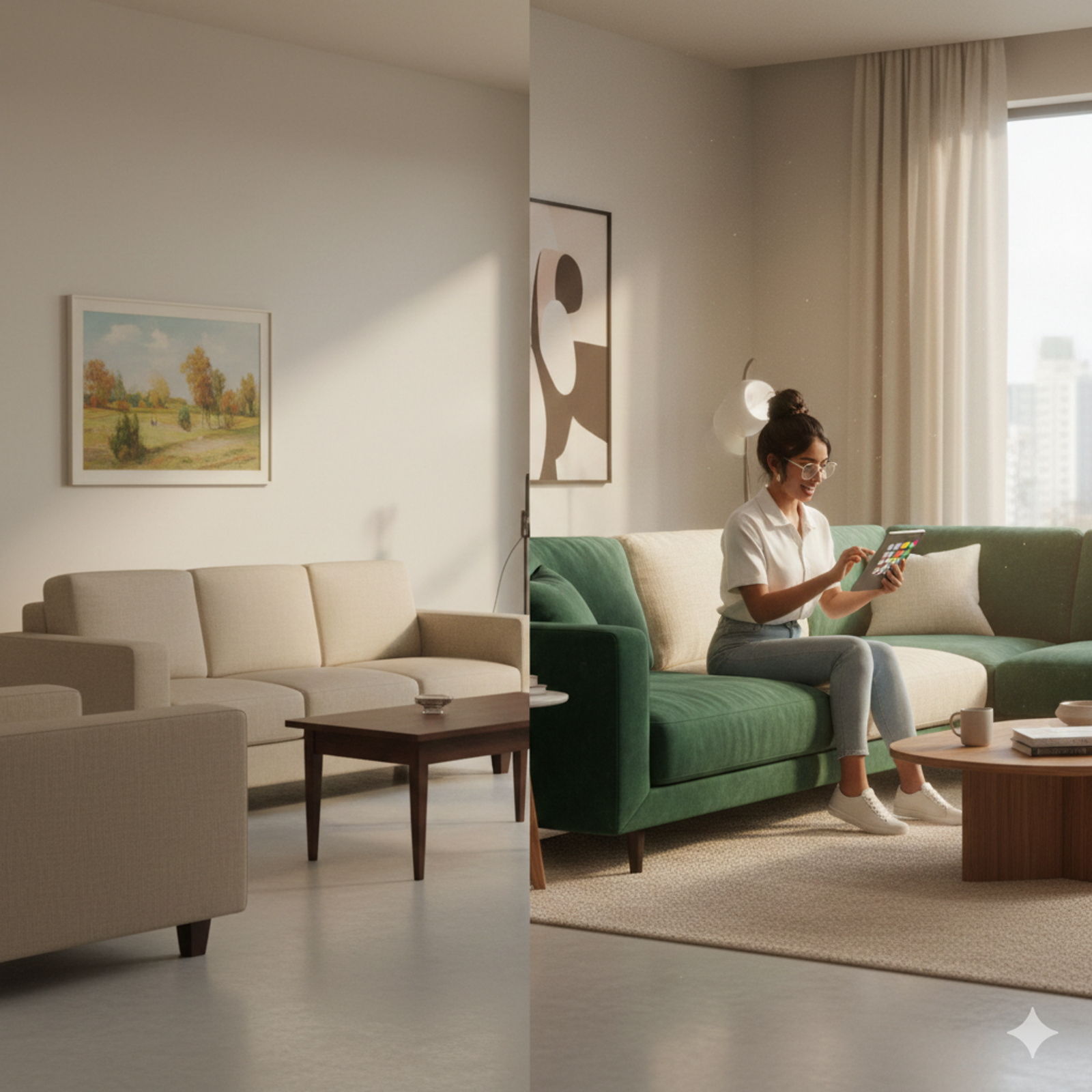
split-screen view. On one side, a flat, boring 2D furniture catalog photo. On the other, a vibrant, 3D interactive living room where a user is using a tablet to change the sofa fabric from velvet to linen in real-time.
2. AI with Precision: The End of "Hallucinated" Furniture
AI is the new engine for productivity, but "generic" AI is a brand killer. If an AI generates a sofa leg that doesn't exist in your warehouse, you've lost the customer's trust.
- ✓The Trend: Using Master 3D Assets to feed generative AI. This ensures every lifestyle image is "SKU-accurate."
- ✓The Play: Creating "Quickshot" style imagery, generating high-end room scenes in hours instead of weeks-long photoshoots
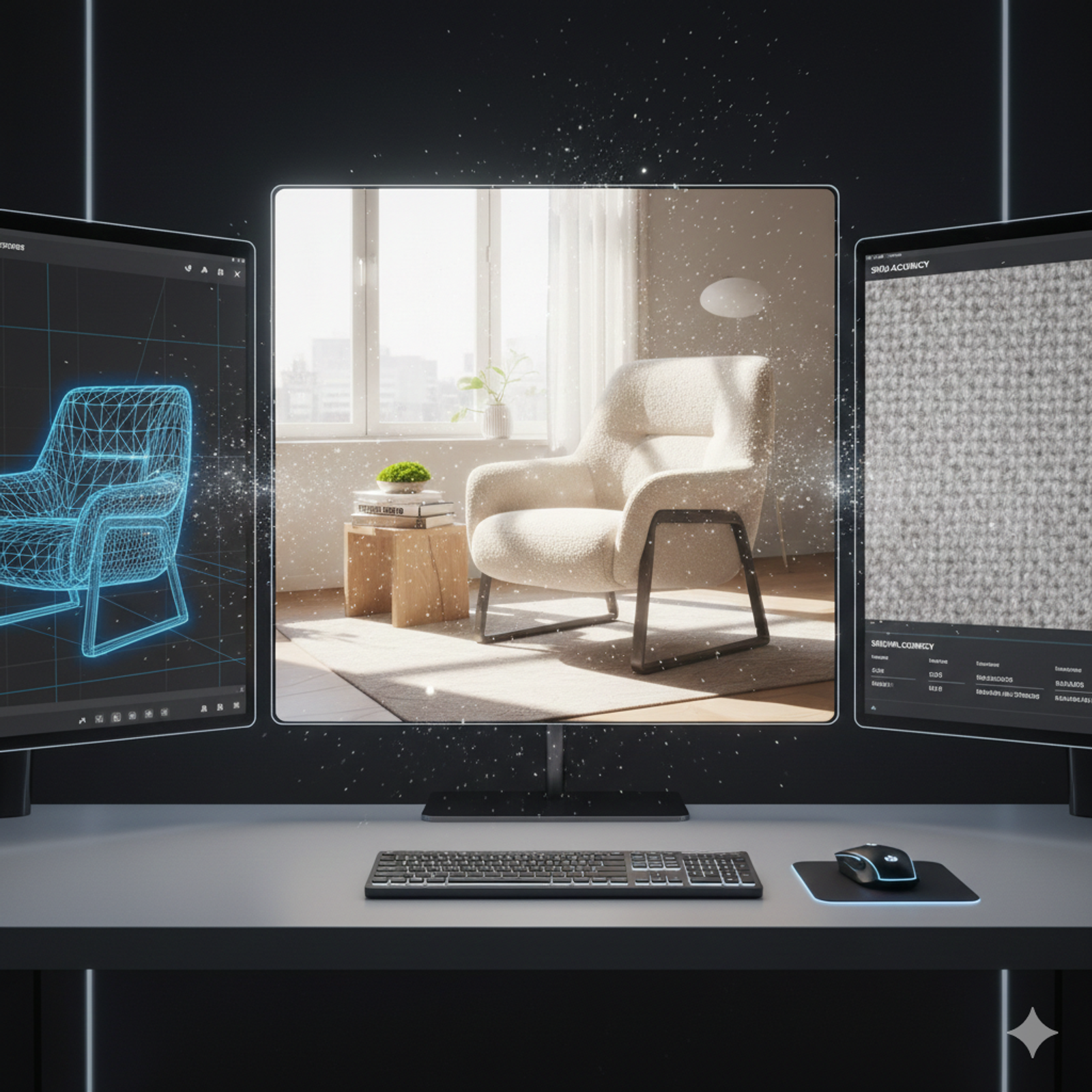
3D wireframe model of a designer chair being instantly transformed into a hyper-realistic lifestyle photo set in a sun-drenched Scandinavian loft.
3. Personalization is the New Standard
The "one-size-fits-all" product page is dead. Today’s buyer expects a "bespoke" experience, even for mass-market goods.
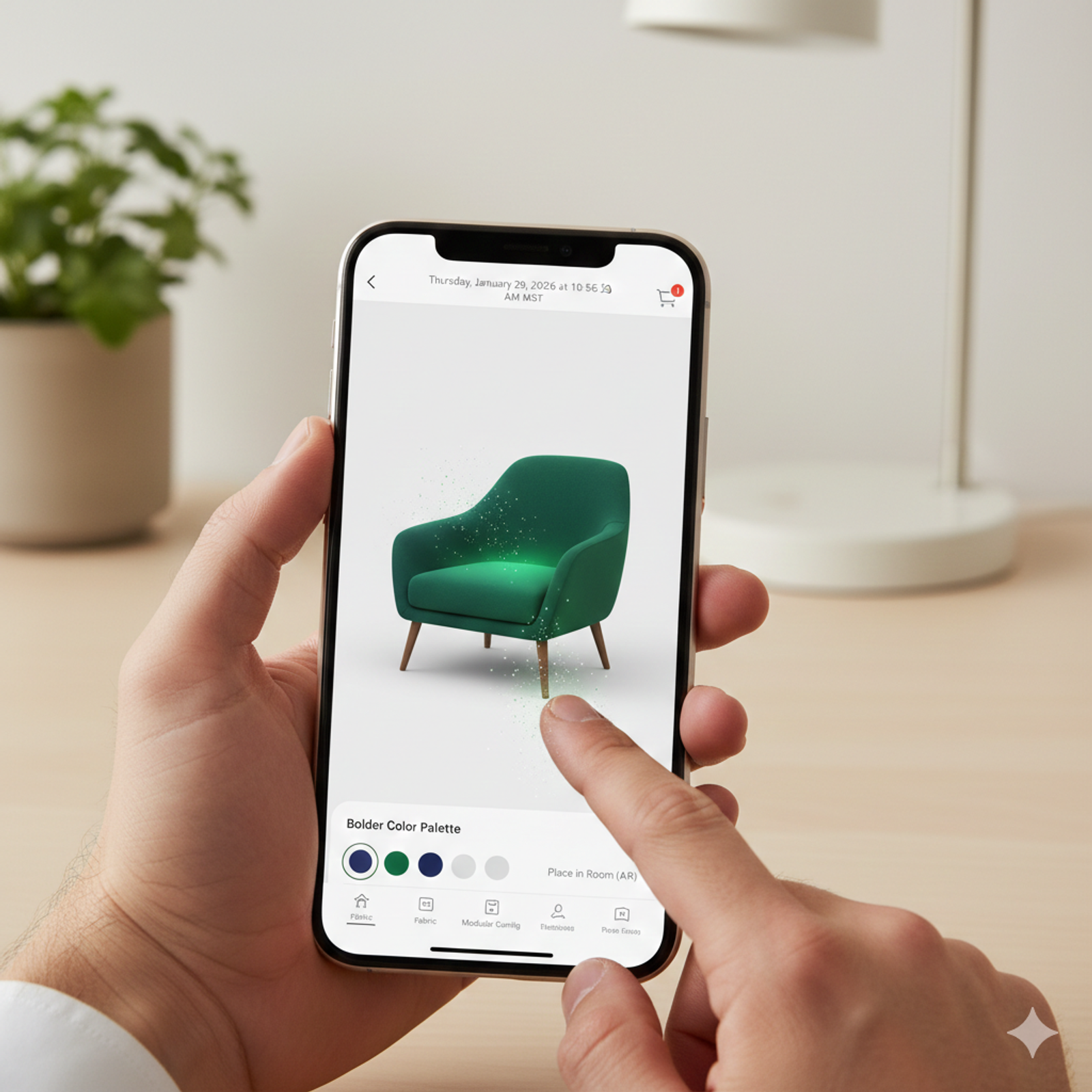
- ✓The Trend: Visual configurations replace clunky dropdown menus.
- ✓The Psychology: When a buyer helps "design" their piece by picking colors and modular setups, they become emotionally invested. This "lock-in" effect drastically reduces cart abandonment.
4. The Boardroom Shift: Visualization as Infrastructure
CFOs are no longer looking at 3D modeling as a "creative" expense; they see it as a financial lever.
- ✓The ROI: High-quality visuals don't just look pretty, they reduce return rates by aligning expectations and increase Average Order Value (AOV) by up to 44%.
- ✓The Strategy: Transitioning from "campaign-led" content (one-off shoots) to "infrastructure-led" content (a central library of 3D assets used across web, socials, and in-store).

The chart shows a sharp upward trend labeled "AOV" and a downward trend labeled "Returns,"
Is Your Brand 2026-Ready?
To stay ahead, the team at Polymuse suggests a simple audit:
- Consistency: Do your social media ads match the quality of your product page?
- Speed: Can you launch a new seasonal collection visually in days, or does it take months?
- Accuracy: Are your AI tools generating real products or "fantasies"?
The plateau in global furniture growth means you can't rely on more people buying; you have to be better at selling to the ones who are already looking.