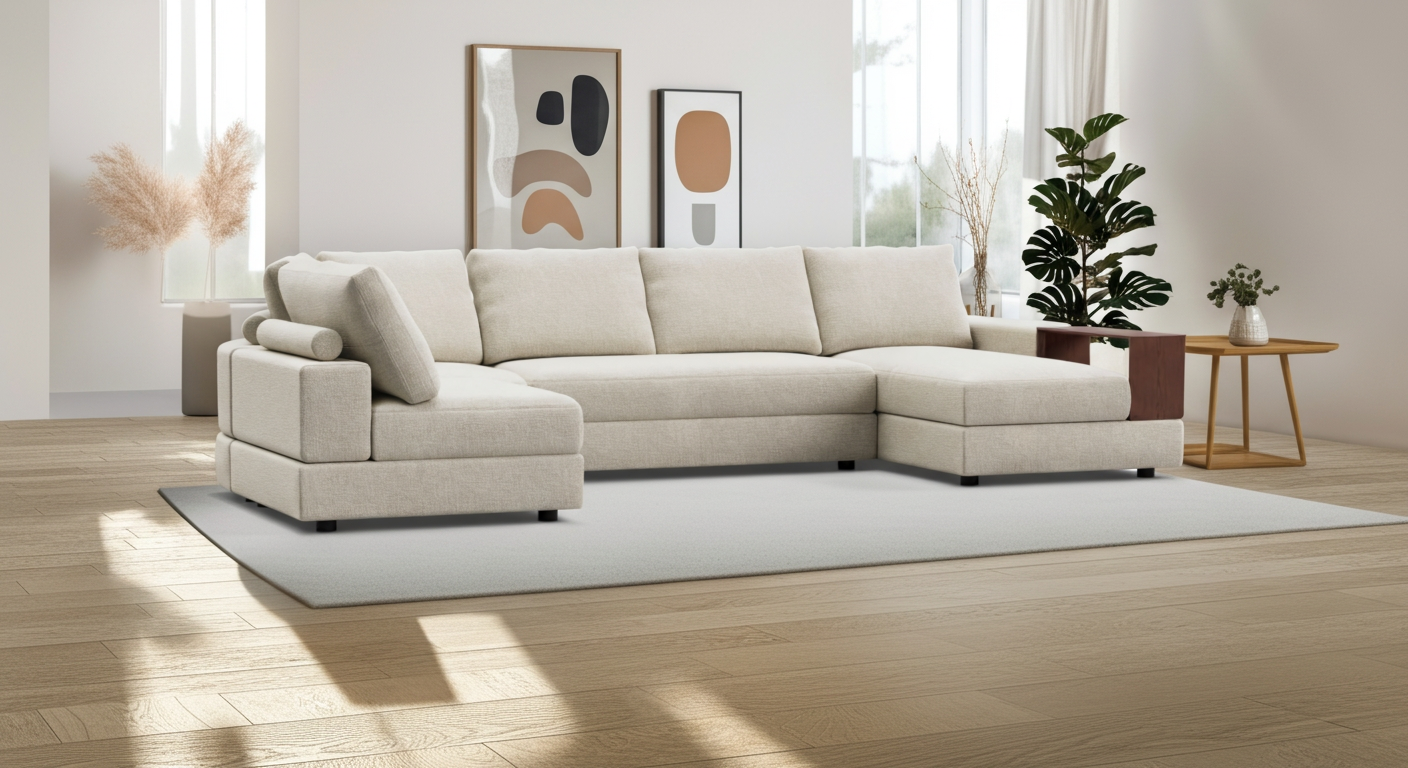
How technology is reshaping traditional craftsmanship and creating new opportunities for growth
The Digital Transformation of the Furniture Industry
How technology is reshaping traditional craftsmanship and creating new opportunities for growth
Executive Summary
The furniture industry is undergoing a profound digital transformation, driven by evolving consumer expectations and relentless technological innovation. This comprehensive report examines how furniture businesses are leveraging diverse technologies to foster growth, enhance operational efficiency, and redefine the customer journey.
Key Finding: Only 20% of European furniture manufacturers have advanced digital transformation roadmaps, yet medium-term investments are expected to potentially double as a percentage of company turnover, signaling rapid acceleration in technology adoption.
From immersive experiences powered by Augmented Reality (AR) and Virtual Reality (VR) to data-driven insights from Artificial Intelligence (AI), companies are discovering innovative ways to connect with customers and optimize processes. The expansion of e-commerce platforms has opened global sales avenues, while advancements in manufacturing, supply chain management, and smart furniture are creating more responsive and sustainable business models.
The Digital Transformation Imperative
The furniture industry, traditionally characterized by manual craftsmanship and labor-intensive processes, is experiencing a significant metamorphosis driven by digital technology. This evolution represents not merely an operational upgrade but a strategic imperative for growth and sustainability in the 21st century.
Industry Transformation Statistics
- 20% — European manufacturers with advanced digital transformation
- 50% — Output increase with CNC machinery at ISD
- 30% — Material waste reduction through digitalization
Companies that integrate digital technologies are setting new benchmarks for efficiency, innovation, and customer engagement. The historical reliance on manual skills, while valued, often resulted in higher costs, limited scalability, and longer production cycles. Today's landscape is defined by synergy between skilled artisans and advanced technologies, leading to a renaissance in production and design.
The digital shift is crucial for addressing challenges such as aligning complex supply chains, deploying new technologies effectively, and meeting environmental and health standards. The transition involves moving from established practices to embracing new systems, requiring robust change management strategies to navigate inherent complexities and workforce apprehensions.
Enhancing Customer Experience with AR, VR, and 3D Visualization
Augmented Reality for In-Home Visualization
Augmented Reality (AR) is rapidly becoming a cornerstone technology for furniture retailers aiming to enhance customer experience and drive sales. By 2025, it's projected that 80% of retail brands will utilize AR for customer engagement. This widespread adoption is fueled by AR's ability to bridge the gap between online browsing and physical in-store experience.
AR allows customers to visualize true-to-scale 3D models of sofas, tables, and other home goods within their own living spaces using smartphone cameras. This "try before you buy" capability significantly reduces purchase uncertainty, a major barrier in online furniture sales.
Impact on Key Metrics
- Return rates on furniture items visualized with VR/AR dropped to under 2% (vs typical 5-7%)
- Shopify merchants using AR experienced 40% fewer returns
- IKEA's AR furniture app boasts 98% size accuracy
Virtual Reality and Immersive Showrooms
Virtual Reality (VR) creates entirely simulated environments, which can be leveraged to build virtual showrooms and allow customers to "walk through" and explore furniture collections from the comfort of their homes. These virtual stores range from simple 3D replicas of physical stores to fantastical, branded environments designed to captivate and inspire.
IKEA leveraged VR to offer immersive design experiences, allowing clients to visualize custom furniture pieces within their homes, which reportedly led to a 40% increase in customer satisfaction and a significant uptick in bespoke orders.
3D Product Visualization and Customization
3D product visualization is rapidly becoming an indispensable tool for furniture brands, fundamentally changing how products are presented online. This technology allows customers to interact with photorealistic 3D models, offering features like 360-degree spins, zoom capabilities, and various configuration options.
66% of respondents believed 3D product visualization significantly enhanced customer experience, and 62% reported increased sales.
Artificial Intelligence Revolutionizing Furniture Retail and Manufacturing
Artificial Intelligence (AI) is rapidly becoming a transformative force within the furniture industry, impacting various facets from customer-facing retail operations to backend manufacturing processes. The ability of AI to analyze vast amounts of data and identify patterns allows furniture companies to make more informed decisions, predict trends, and tailor offerings to meet evolving consumer demands.
AI-Powered Personalization and Customer Service
AI-driven chatbots provide instant, 24/7 support to customers, answering frequently asked questions, assisting with product searches, and guiding users through the purchasing process. Alibaba's chat robot handled 95% of customer inquiries in 2017, demonstrating the scalability and effectiveness of AI in managing customer interactions.
Beyond reactive support, AI algorithms analyze customer data to deliver highly personalized product recommendations. This creates more relevant and engaging shopping experiences that can significantly increase conversion rates and average order value.
AI in Furniture Design and Manufacturing Optimization
In design, AI algorithms can analyze vast datasets of consumer preferences, current trends, and material properties to generate novel furniture designs or suggest modifications. This leads to products that are not only aesthetically pleasing but also highly functional and aligned with market demands.
Within manufacturing, AI-powered sensors and computer vision systems monitor machinery and production lines in real-time, detecting anomalies, predicting maintenance needs, and preventing costly breakdowns. This predictive capability reduces tool failure, extends tool life, and minimizes machining time.
AI for Demand Forecasting and Inventory Management
AI Success Stories
- Wayfair: Applies machine learning to forecast regional demand, streamline inventory, and tailor marketing.
- American Furniture Warehouse: Improved inventory accuracy by 99% and reduced shrinkage by 50% after implementing RFID technology.
E-commerce and Online Marketplaces: Expanding Reach
The rise of e-commerce and online marketplaces has profoundly impacted the furniture industry, fundamentally changing how consumers discover, evaluate, and purchase home furnishings. No longer confined to physical showrooms, customers now have access to a global marketplace with unprecedented variety.
Market Growth Projections
Global E-commerce Furniture Market (Source: The Business Research Company)
- 2024: $34.6 billion
- 2025: $37.4 billion (8.1% CAGR)
- 2029: $50.41 billion (7.7% CAGR)
Alternative Growth Estimate (Source: Technavio)
- 2024-2029: $282.1 billion growth
- CAGR: 23.4%
This surge is attributed to several factors: increasing smartphone penetration fueling mobile commerce, broader consumer behavior shifts towards online shopping for convenience and wider selection, and continuous improvement of the online shopping experience through technologies like AR and VR.
Furthermore, the COVID-19 pandemic accelerated the adoption of online shopping across many sectors, including furniture, as consumers became more accustomed to making significant purchases remotely. This behavioral shift, combined with ongoing technological advancements, underpins the robust growth outlook.
The Rise of Smart Furniture and IoT Integration
Smart furniture, once a niche luxury, is rapidly becoming mainstream, driven by advancements in sensor technology, wireless connectivity, and the proliferation of the Internet of Things (IoT). This evolution means that even mid-range furniture brands are now incorporating technology into their offerings.
Smart Furniture Market Potential: 13.7% estimated CAGR through 2030 (Source: Grand View Research)
Key drivers include:
- Tech-savvy millennials
- Aging population needing assistive devices
- Remote workers seeking smarter home office solutions
Smart furniture encompasses products from beds that gently vibrate to wake you up and adjust lighting, to kitchen tables that can heat your coffee mug, and couches with integrated cooling systems and Bluetooth speakers. This shift is largely fueled by changing lifestyles, particularly the rise of hybrid work models and decreasing size of modern living spaces.
Leading global brands such as IKEA, West Elm, and Xiaomi Youpin are actively developing tech-enhanced furniture to meet growing demand. The next phase moves beyond "smart" features to "intuitive" capabilities, where furniture can anticipate user needs, adjust in real-time, and seamlessly blend into the living environment.
Case Studies: Furniture Businesses Embracing Technology
| Company | Technology Focus | Key Innovation/Application | Impact/Benefits |
|---|---|---|---|
| ufurnish.com | AI-Powered Image Search, E-commerce | Search and comparison website; AI image search for product discovery | Enhanced customer convenience, wider product access, informed purchasing decisions |
| JEGA | Cloud-Based Production, Manufacturing | JEGA CLOUD FACTORY Lite: integrated production management system | Increased productivity, reduced manual labor, improved production speed |
| FurnishSpace | AR/VR, Virtual Showroom | AR/VR app for in-home visualization and virtual showrooms | Reduced purchase uncertainty, increased customer confidence, fewer returns |
| Presti AI | AI, Photorealistic Imagery | Generative AI for creating realistic lifestyle photos from product images | Reduced cost and time for marketing visuals, scalable content creation |
Retail Innovation: ufurnish.com — Founded by Deirdre Mc Gettrick, ufurnish.com exemplifies how technology reshapes furniture discovery. With 90% of consumers beginning their furniture buying journey online, platforms like this provide comprehensive comparison tools. Key benefits: convenience, product variety, price comparison, customer reviews.
Manufacturing Transformation: JEGA — JEGA CLOUD FACTORY Lite integrates design, production planning, material management, and progress tracking. The system achieves up to 95% material utilization in production scheduling. Modules: 3D Design, CRM, DMS, MCS, MPM.
AR/VR Innovation: FurnishSpace — Developing AR/VR applications for immersive furniture shopping experiences, allowing customers to visualize products in their homes before purchase, reducing uncertainty and returns. Technology: AR/VR app for in-home visualization and virtual showrooms.
Challenges and Considerations
Cost of Implementation and Integration
The adoption of advanced technologies presents considerable cost implications. The initial investment required for hardware, software, and system integration can be substantial, particularly for small and medium-sized enterprises (SMEs).
Data Management, Security, and Privacy
The increasing reliance on digital technologies generates vast amounts of data, bringing forth significant challenges in data management, security, and privacy. Furniture businesses must establish robust systems for collecting, storing, processing, and analyzing data efficiently and ethically.
Key Security Considerations
- Implementing strong cybersecurity measures (encryption, firewalls)
- Compliance with data privacy regulations (GDPR, CCPA)
- Transparent data practices for smart furniture collection
Workforce Training and Adapting to Change
Successful integration of advanced technologies is heavily dependent on the workforce's ability to adapt and effectively utilize new tools. This necessitates significant investment in training and change management.
Future Outlook: The Evolving Landscape
The future of the furniture industry appears promising, driven by continuous technological advancements, evolving design philosophies, and increasing emphasis on sustainability. Several key trends are predicted to dominate over the next 5-10 years.
- Technology Integration — Furniture pieces will seamlessly integrate with voice assistants, smartphones, and smart home systems, offering enhanced convenience and personalization.
- Sustainability Focus — Greater emphasis on eco-friendly materials, circular economy principles, and responsible manufacturing practices will dominate consumer preferences.
- Customization & Personalization — Advanced manufacturing technologies will make bespoke furniture more accessible, allowing customers greater control over design elements.
- Multi-functional Design — With smaller living spaces, furniture serving multiple purposes and adaptable configurations will experience increased demand.
Conclusion: Embracing Technology for Sustained Growth
The furniture industry stands at a pivotal juncture, where technology is no longer a peripheral tool but a central driver of innovation, efficiency, and customer engagement. From design conception to final delivery, digital transformation is reshaping every business facet.
The future of furniture is intelligent, connected, and customer-centric, and technology is the key to unlocking its full potential.
The imperative for furniture companies is clear: embrace technological advancements not as a one-time project, but as a continuous journey of adaptation and improvement. Those who successfully integrate technologies like AI, AR/VR, IoT, and advanced e-commerce platforms will be best positioned to meet evolving consumer demands.
While challenges exist—including implementation costs, skilled workforce requirements, and data management complexities—the potential rewards far outweigh the hurdles. By fostering innovation culture, investing in talent and training, and strategically deploying technology, furniture businesses can unlock new growth avenues and build resilient, future-proof enterprises.
Embracing this digital revolution is not just an option; it is the pathway to sustained growth and success in the dynamic global marketplace.
References
- ResearchGate — Transforming The Furniture Industry in The Digital Age
- CSIL Milano — Digital Transformation European Furniture Industry
- BrandXR — 2025 Augmented Reality in Retail E-commerce Research Report
- Drvna Industrija — AI in Furniture Manufacturing
- The Business Research Company — E-commerce Furniture Global Market Report
- Made-in-China — 10 Groundbreaking Trends in Tech-Integrated Furniture for 2025
- Furniture News — How Technology is Changing the Furniture Game
- JEGA Asia — Digitalization Trend in Traditional Furniture Manufacturing
- Divinside — Immersive Furniture Experience
- TechCrunch — Presti AI for Furniture Product Photography
Ready to modernize your catalog?
Join 500+ brands using our 3D engine.